Toitū Visual Sovereignty

Director

Chelsea Winstanley

Producers

Desray Armstrong, Chelsea Winstanley

Cinematography

Mike Jonathan, Darryl Ward

Editors

Huhana Ruri-Panapa, Cushla Dillon, Brendon Chan

Music

Maree Sheehan

With

Nigel Borell

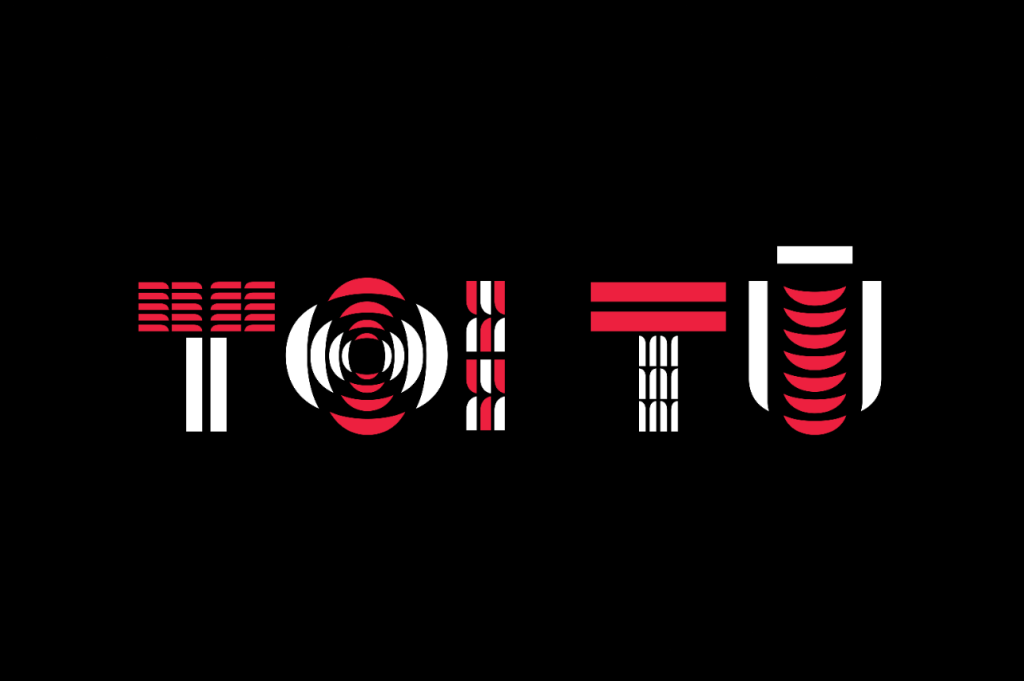
Toi Tū Toi Ora: Contemporary Māori Art was the largest Māori exhibition in the history of Auckland Art Gallery and attracted attendance levels not seen by the gallery since 1989. But its triumph masked a deeper tension. 

Chelsea Winstanley’s documentary follows the journey of curator Nigel Borell as he navigates the constraints between institutional authority and Māori self-determination. Borell’s curatorial vision is clear – Māori art must be authored, not simply advocated for. For the artists, this represents a chance to be seen on their own terms, and is an initiative that ultimately leads some to the global stage of the Venice Biennale. 

But as the scale of the exhibition grows, so does the institutional resistance. The result is a reckoning: whose story is being told, and who holds the pen? With many of the artworks exploring the legacy of colonialism, the making of the exhibition itself becomes a living reflection of that very struggle. Laying bare behind-the-scenes conversations rarely seen on screen, TOITŪ Visual Sovereignty lifts the curtain on the inner workings of an institution and examines the cost of visibility without control – and the quiet power of walking away. — Heperi Mita 
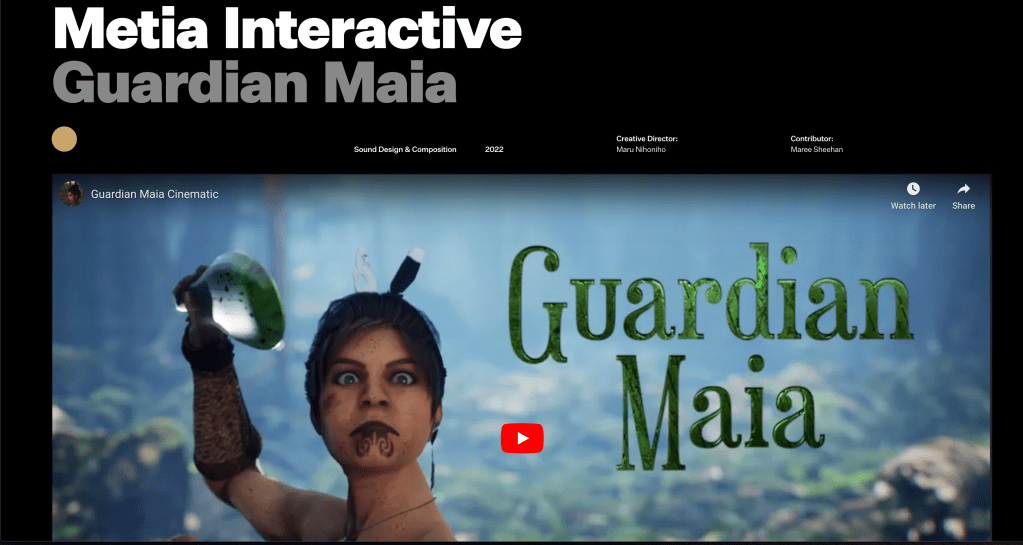
Guardian Maia – Metia Interactive + Maree Sheehan

BEST DESIGNER AWARDS 2022 – GOLD – Sound design and composition
https://bestawards.co.nz/moving-image/sound-design-composition/metia-interactive/guardian-maia/

Judge’s comments:

The layering of contemporary sound design techniques with traditional Maori instruments created a beautifully distinct and original soundscape that dynamically enhanced the game environment and action.

Description:

Guardian Maia is an action-adventure story for a game that includes exploration and discovery, platforming, puzzle solving, character upgrades, fast-paced combat, and meaningful choices that effect both the real and spiritual worlds and the game mechanics.

Set in a post-apocalyptic Aotearoa, seven hundred years in the future, the story takes Maia through harsh environments, abandoned ruins, and into the spirit realms of the Māori atua.

Maia, a guardian, highly trained in hand-to-hand combat patrols the forest to protect her people from the creatures that roam there.

The Guardian Maia cinematic was created to promote the Guardian Maia gamebooks. We made the cinematic using the Unreal game engine and was rendered in real-time.

The cinematic features a small part of Maia’s world. Maia is in her forest on patrol, and she comes face to face with the threats that she is protecting her people from.

The soundtrack for this cinematic includes traditional Māori instruments – Taonga pūoro within a modern cinematic tone. The utilisation of Taonga pūoro was used to create an authentic sound which also brings the emotion of the action through. It was also important to the cinematic as the game is set in a Māori world.

Metia Interactive
https://www.metia.co.nz/

Saints of Paradox – Tatiana Tavares + Maree Sheehan

BEST Awards 2022 – Silver for Sound Design and composition
https://bestawards.co.nz/moving-image/sound-design-composition/maree-sheehan-tatiana-tavares/saints-of-paradox/

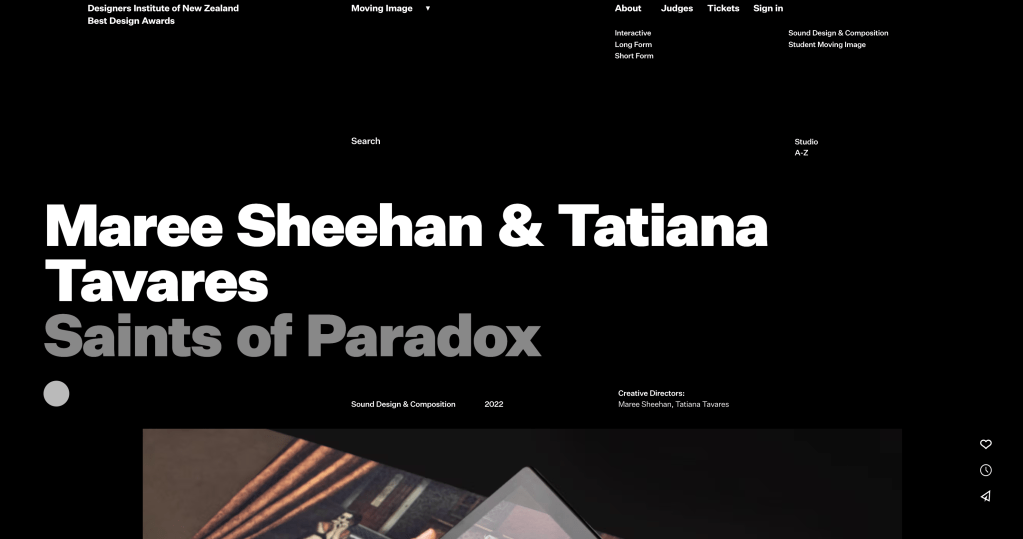
Saints of Paradox explores how narration in a picture book can be expanded through the use of Augmented Reality (AR) technology. The story concerns a woman who after 40 years of mourning at the loss of her lover in the 1964 Brazilian coup d’état, lives in a room of accumulated memories. One day when the only photograph of her lover breaks, it sets in train a series of strange events.

Sound plays a significant role in the work, both as an establisher of atmosphere and as a device for drawing our attention to story events. Soundscapes operate as instant identifiers of narration as they remind us who is telling the story. The sound was designed to provide texture, timbre, heighten the emotional impact and punctuation of movement. While each spread might be seen as an individual visualisation, the soundscape needed to create a sense of consistency and flow across the whole book. Paradoxically, it also establishes an instant aural demarcation between each of the saints. These demarcations are established on the first page and then play out consistently, with each saint recycling certain thematic sonic features.

All three variations of sounds have a delineated sense of religiosity, but the Father of Orthodoxy’s soundscapes are darker and more ominous with overtones of judgment and ecclesiasticism. Here we hear the toll of bells, dark choirs, mystical music, the flicker of burning candles, and the threatening peal of thunder. The Father of Pragmatism is accompanied by the mechanical sounds of ticking clocks, banging metals, revolutionary speeches, and gunshots. In contrast, the Mother of Benevolence carries with her memories of childhood, gentle angelic melodies, singing birds, and romantic treatments of the Samba and other nostalgic music. After selecting a saint to narrate a page, a thematically coherent soundscape immediately became discernible. Sound will normally play for a few orienting moments before the saint begins speaking. Normally each segment plays in the background, but it lifts in intensity in relation to the dramatic plot point of the episode. It then falls away to a more contemplative level that invites us to consider details in the image after the monologue has finished.

  • Creative DirectorsMaree Sheehan, Tatiana Tavares

Threaded Media Ltd – Special Ed. 21 Te Pō and Te Ao Marama

BEST Awards 2022 – Silver for Sound Design and Composition
https://bestawards.co.nz/moving-image/sound-design-composition/threaded-media-limited-1/threaded-special-ed21-the-te-po-te-ao-marama-1/

Threaded is an international design magazine. Special Ed.21: The Te Pō & Te Ao Mārama Issue draws from cultural and collaborative frameworks situated in tikanga Māori (Māori customary practices), mātauranga Māori (Māori knowledge) and kawa (Māori protocols). Central to this project resides the role of collaboration and creative partnerships, through cultural advice by kaumātua (elders) and kuia (female elder) and through kawa (Māori protocols) and values in editorial practice.

Sonic artistry and augmented reality (AR) are activated through printed motifs and incorporate hau (breath of life) into the pages. Sound design was vital to creating a connection with the end-user that when synthesised with augmentation provides a deep connection and sense of immersion. The sonic palette provides people a way of engaging and exploring mātauranga Māori that is positioned around the unseen and that which is felt aurally and visually.

Sound design expresses the representation of Māori creation narratives that are inspired by te taiao, traditional taonga puoro, synthesized pads and strings and the sound that we as human beings generate. ‘Te oro o te orokohanga: the sound(s) of creation’ is composed and produced for Te Pō and Te Ao Mārama pukapuka. This represents the creation of sound, the unseen which is heard and felt that are manifested in vibrations and frequencies, woven together in sonic representations within Threaded Ed.21 that connects us to mātauranga Māori and whakapapa.

From Te Kore, the potential of sound is sonically represented through the sounds of the planets. The high frequencies of the pūtorino are weaved together to acknowledge Hineraukatuari (goddess of sound and music), bringing the potential of sound into being. As with Te Pō, Te Wheiao and Te Ao Mārama, each narrative required unique sonic creations that originated through the process of meditation, listening and being open to hearing the appropriate sonic palettes that were then threaded together to support the narrative and waiata, ‘Ko te Pū’.

Sonic experiences were scanned from the printed pages and directed the audience to the Instagram platform, extending the materiality of printed matter. This approach afforded distinct modes of cognitive processing that combined the visual and the linguistic, the spatial and the temporal, sound, and virtual reality to graphically symbolize the many layers and dimensions of things unseen: the realm between being and non-being.

Creative Directors
Fiona Grieve, Maree Sheehan (Sound)

Design Director
Kyra Clarke

Team Members
George Hajian, David Coventon
Contributors
Tatiana Tavares, Kawiti Waetford, Jesse Waetford, Ataria Gibbons, Tepora Kauwhata, Karyn Gibbons, Marcos Steagall

Extended Whānau + Maree Sheehan + Klim Type Foundry

Bronz Best Awards 2022 – Sound design and Music Composition
https://bestawards.co.nz/graphic/design-communication/extended-whanau/manuka/

Mānuka is a typeface collection designed by Klim Type Foundry. We were tasked with creating the launch campaign for the collection.

In familiarising ourselves with the typeface, two key themes began to reasonate with the qualities of the typeface. The first being te reo Māori, the second being native flora and fauna.

Our approach was to create an audio visual poem that used te reo Māori to take a typographic walk through a native forest. The sonic composition was created by drawing upon the sounds of Te Taiao (nature) from the wind, to the sound of the trees, to insect and bird life. infused with hints of the pūtōrino (traditional Māori flute) and layered with subtle synthesised pads that supported an ominous mood.

Alongside various native plants, Māori onomatopoeic words for native bird calls were also introduced to the poem. Often, te reo Māori is associated with native birds, it’s a lyrical, rhythmic language and the metaphors between our manu (birds) and speech are many.

Throughout the poem, the different font weights and styles build visual relationships to different trees.

Certain parts of the poem also reference relevant whakatauki (Māori proverbs) that enforce the interconnectedness of nature and Māori culture.

The poem was brought to life by being projected at a large scale onto a wall of native bush.

The campaign videos activate the typeface and poem through mesmerising movements of trees dancing in the wind. The campaign photographs captures the essence of our native forest qualities within the forms of the typeface.

These assets were rolled out across social media, web and print applications.The result being not just a type specimen, but also a native species specimen, and a native language specimen.

Creative Directors
Tyrone Ohia
Chris Sowersby

Team Members contributors
Maree Sheehan – Sound Design and composition
Toaki Okano
Rob Lewis

Extended Whānau
https://bestawards.co.nz/studios/extended-whanau/

Klim Type Foundry
https://bestawards.co.nz/search?q=Klim