Toi Tu Toi Ora short film with Chelsea Winstanley, the Oscar nominated producer of Jojo Rabbitand What We Do In The Shadows. Māori Academy Award nominated filmmaker Chelsea Winstanley (Ngāti Ranginui) launched an immersive video she directed, entirely shot on an iPhone 12 Pro Max. The video, narrated by Taika Waititi with music composed by Maree Sheehan, marks the momentous opening of the Māori contemporary art exhibition.
The piece was released before Winstanley’s feature documentary on Toi Tū Toi Ora, the landmark exhibition of contemporary Māori art that opened this weekend at the Auckland Art Gallery Toi o Tāmaki. Auckland Art Gallery Toi o Tāmaki’s exhibition, Toi Tū Toi Ora: Contemporary Māori Art; the most comprehensive survey of contemporary Māori art to be presented in New Zealand in recent history.
Apple CEO Tim Cook has congratulated Māori filmmaker Chelsea Winstanley on her new work, which she shot entirely using an iPhone 12 Pro Max.
“It’s incredible to see art, creativity and technology come together in celebration of a new exhibit honouring Aotearoa New Zealand’s indigenous Māori people and culture,” Cook tweeted.
Tyrone Ohia and Extended Whānau have taken out two purple pins, four golds and one silver for ÕTAIRONGO design at the BEST Awards. It is truly an honour to work with Tyrone and for this project and kaupapa to be recognised with these prestigious wards.
Judge’s comments: An absolutely stunning and breath taking piece of work, original in its thinking and striking in its execution, a truly contemporary take on culture. This project has depth and layers of thinking with an authentic connection to traditional storytelling and combine that with a fresh and beautifully crafted visual execution, Ōtairongo moves a visual language forward in leaps and bounds.
Dr. Te Rita Bernadette Papesch, Moana Maniapoto, Ramon Te Wake, Tui Matira-Ransfield, Jane Hakaraia, Hemi Kelly, Artspace Aotearoa, Auckland Arts Festival
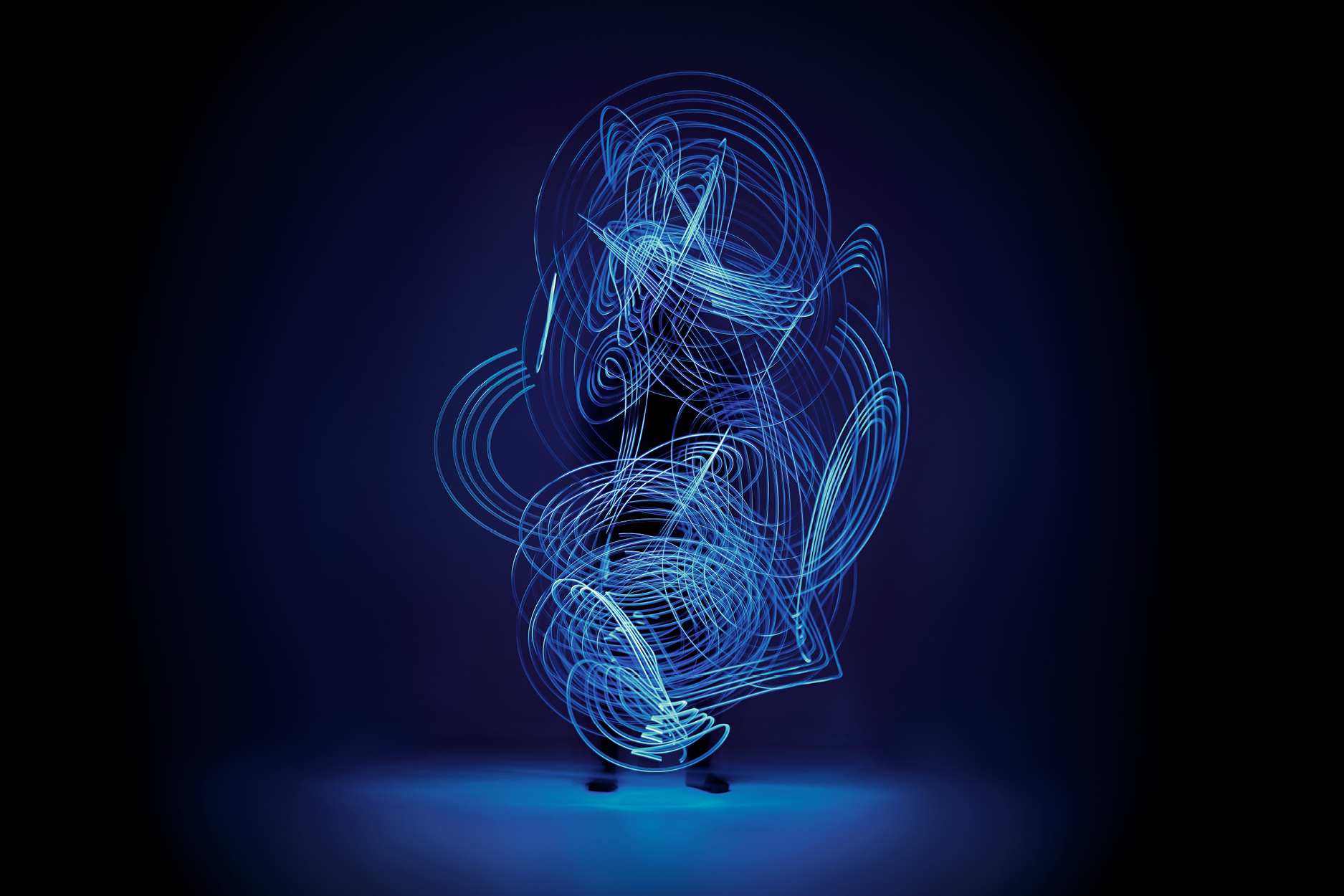
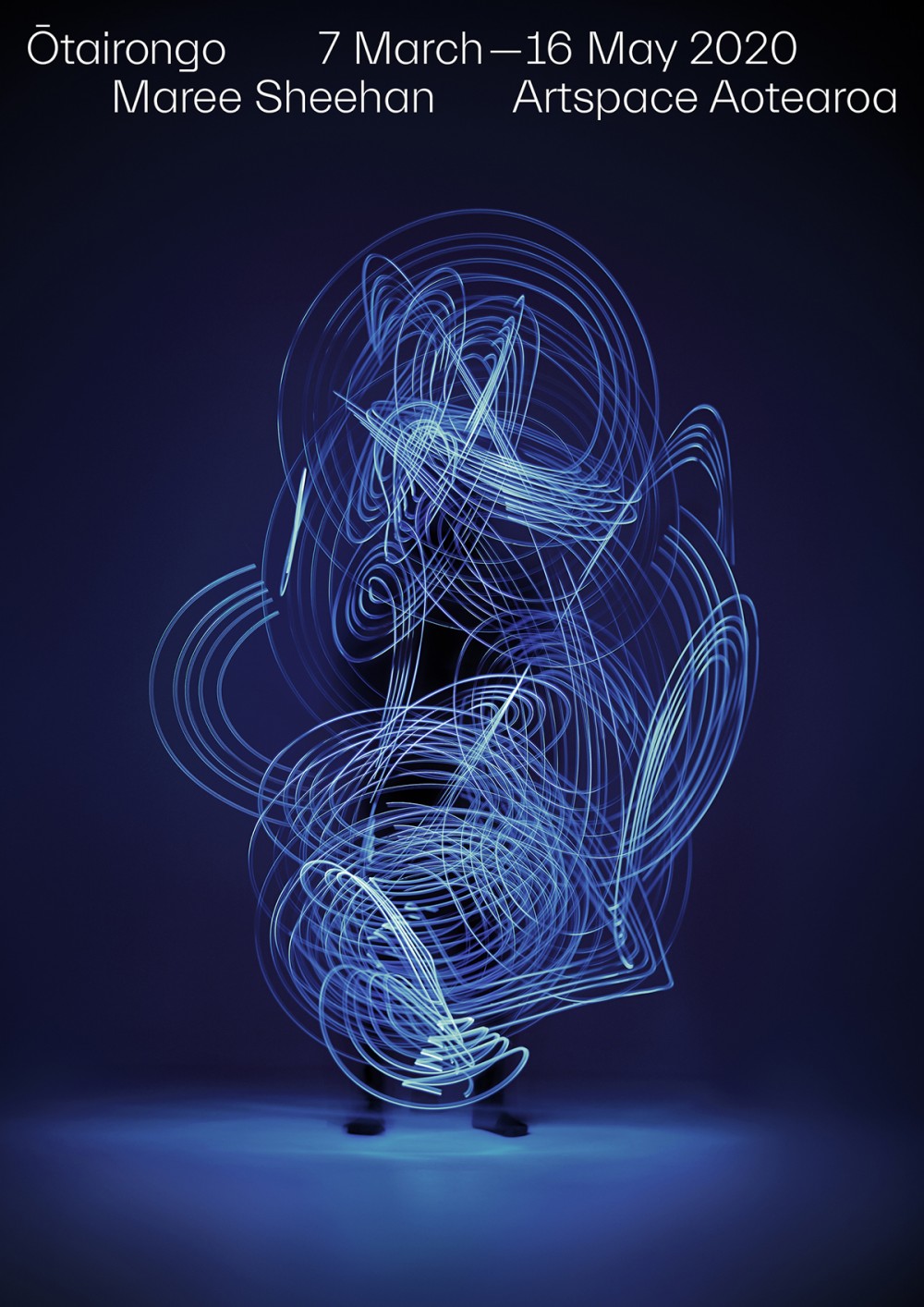
PUSHING AT THE BOUNDARIES OF CONTEMPORARY MĀORI ART, SOUND ARTIST MAREE SHEEHAN EXPLORES A NEW FORM OF PORTRAITURE IN THIS IMMERSIVE INSTALLATION, A WORLD FIRST.
Image: Tyrone Ohia
ŌTAIRONGO EXHIBITION CAN NOW BE EXPERIENCED ONLINE
Using only sonic elements as her palette, each portrait captures the wairua and mauri of three mana wāhine Māori – Moana Maniapoto, Te Rita Papesch and Ramon Te Wake.
This immersive installation is a world first. Elevating your aural senses, you are invited to put on a pair of headphones and be submerged into an ethereal plane where kōrero, waiata, the marae, whanau, and whenua converge to create a captivating 360° experience.
Ōtairongo opens on Friday 6 March and continues until Sat 16 May 2020
Maree Sheehan is a composer, sound artist and creative practitioner whose work centres on Indigenous sound, wāhine Māori narratives, and environmental listening. Working across film, television, multi-channel installation and immersive sonic environments, her practice positions oro (sound) and ihirangaranga (vibration) as carriers of mauri and identity. With decades of experience in contemporary music composition, she has received multiple industry recognitions, including the APRA Professional Development Award for Screen Composition (2021) and the APRA Art Music Award for Composition (2022). Her compositional voice has featured in documentary, short film and broadcast works including Queer and Here (Māori Television), Disrupt (Koru Productions), and the award-winning documentary PLUCK directed by Kirsty Griffin.
Maree has been commissioned by Los Angeles County Museum of Art to create with Yāamay poets from Tongva and Pechanga nation, a sound garden of audio cultural immersive sound portraiture in front of the The David Geffen Galleries at LACMA, designed by architect Peter Zumthor, will officially open to the public on April 19, 2026. The sound garden is due to open in 2027.
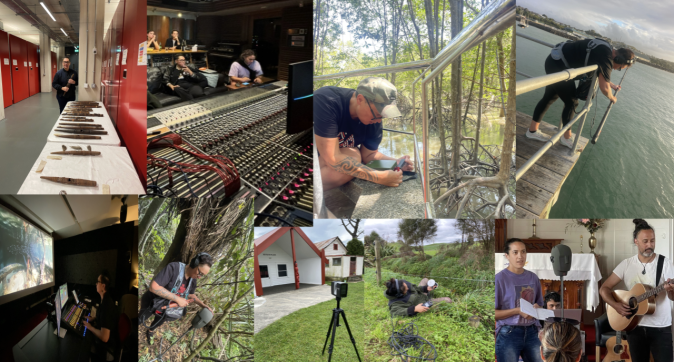
In 2026, Maree was commissioned as a sound artist for the Thailand Biennale 2026, contributing to the Eternal Kalpa programme with the major collaborative work Cherishing the Sea Forests, created with Alex Monteith and Apiwat Thongyoun. The work honours marine and mangrove ecologies through immersive, site-responsive sound.
Maree is also a member of the artist collective Toiaa Taiao, alongside Tihikura Hohaia and Alex Monteith. Their major newly commissioned project by Govett Brewster Gallery, Whiria ko te iwi tuna, brings together immersive visual and sonic storytelling to give form to the underwater lifeworlds of Te Whanganui—a manga in the rohe of Ngāati Moeahu, which meets Te Moana-Taapokopoko-a-Taawhaki near the western-most point of Taranaki. Focusing on the ngutuawa—the final 100 metres before the manga meets the sea—the project traces the cumulative impacts of more than a century and a half of settler-colonial land and water mismanagement, while reasserting whakapapa relationships between tuna, awa and people through multi-channel moving image and spatial sound. The season runs from 28th February 2026 – July 2026
In 2025, she composed the score for Toitū Visual Sovereignty, directed by Academy Award–winning filmmaker Chelsea Winstanley. The film had its international premiere at the Santa Barbara International Film Festival in 2026, marking a significant milestone in the global presentation of Māori-led visual and sonic storytelling. Her score advances her articulation of Toitū Sonic Sovereignty, positioning sound not as a supporting layer to image, but as a living, relational force within Indigenous cinema.
Her recent international practice continues to expand the field of Indigenous sonic art. In 2024–2025, as sonic producer and composer with AWA – Artists for Waiapu Action, she contributed to APT11 at Queensland Art Gallery | Gallery of Modern Art in Brisbane. Her underwater multi-channel work developed with Te Whare Taiao o Te Kāhui o Taranaki was presented as part of Sea Change: Transformative Currents for Action in the Pacific Ocean at Oceanside Museum of Art in Southern California, foregrounding awa and moana as living acoustic entities through immersive 5.1 sound.
Her practice-led PhD, The Sound of Identity: Interpreting the Multi-dimensionality of Wāhine Māori Through Audio Portraiture (completed at Auckland University of Technology in 2020), culminated in the exhibition Ōtairongo at Artspace Aotearoa. Ōtairongo was subsequently included in Toi Tū Toi Ora: Contemporary Māori Art at Auckland Art Gallery Toi o Tāmaki (2021), curated by Nigel Borell, where she was the only sonic artist represented. In 2025, Ōtairongo was also exhibited in the Global Fascisms exhibition at Haus der Kulturen der Welt, Berlin, extending the work’s international reach. The project received the Toitanga Purple Pin and three Gold Pins at the Designers Institute of New Zealand Best Awards, and in 2022 she was invited to establish and serve as an inaugural judge for the Best Awards Sound Design category.
In 2025–2026, she continues as Kairangahau Matua (Toi) at Te Manawahoukura Research Centre, Te Wānanga o Aotearoa, advancing Kaupapa Māori–led sonic research. She previously held senior academic roles at Te Ara Poutama and served as Head of Postgraduate Studies, School of Art and Design at AUT, and in 2024 undertook the Pou Whakaaweawe role at Ngā Pae o Te Māramatanga. In recognition of her research leadership and impact, Maree was awarded Researcher of the Year 2024 by the Royal Society of New Zealand.
Across composition, sound art, research and teaching, Maree’s work is grounded in sustained, kaupapa-driven collaboration. She acknowledges the mentors, artists, communities and research partners who have shaped her trajectory, and remains committed to artistic practices that strengthen Māori knowledge systems, ecological awareness, and sonic sovereignty for present and future generations.
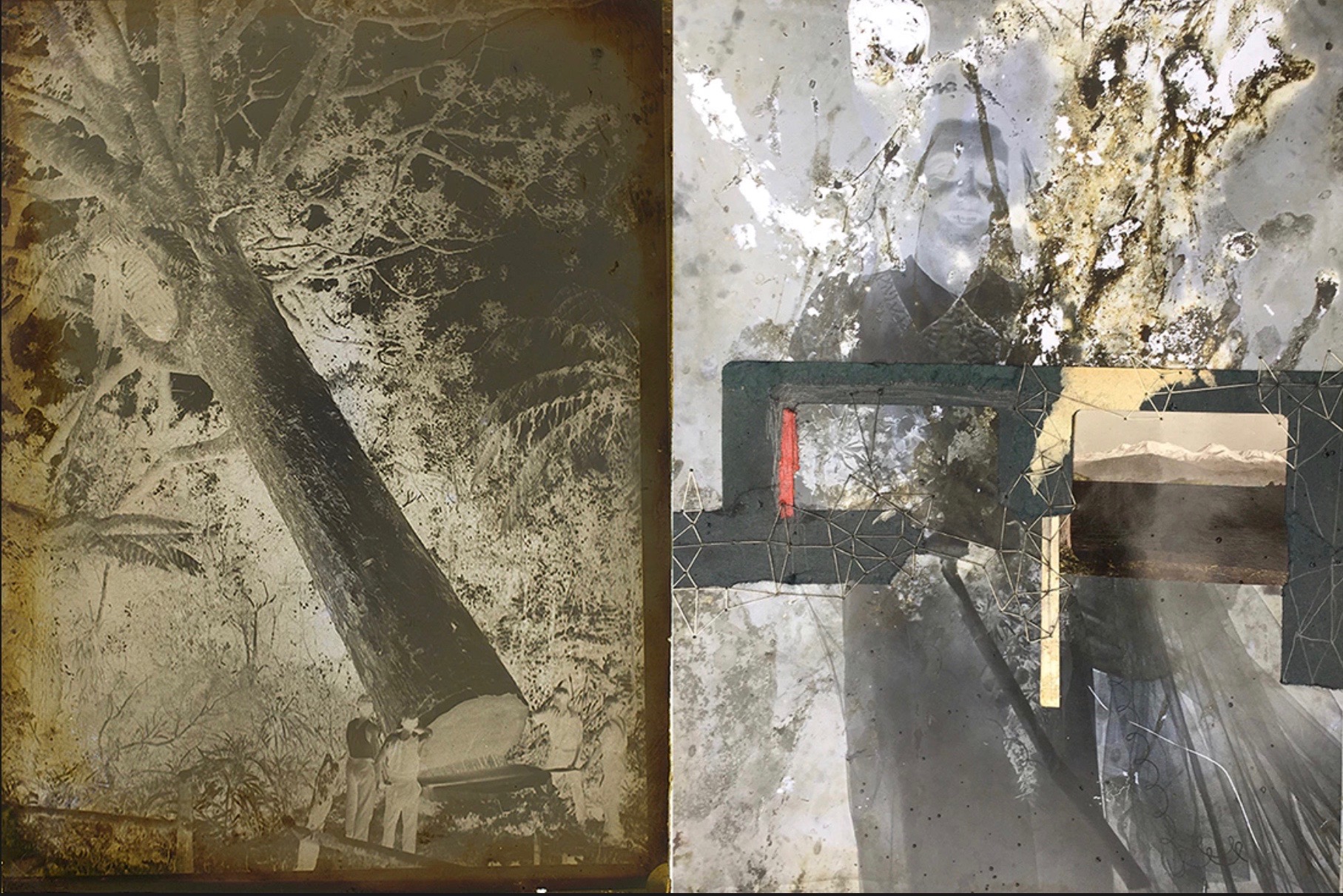
F4 Collective (The artists) + Maree Sheehan (Composer) + Tudor Collins (1898–1970), photographer + Shaun Higgins (Curator of Pictorial at the Auckland War Memorial Museum)
Pictorial curator Shaun Higgins, sound artist Maree Sheehan and F4 Art Collective have collaborated to re-interpret the work of Northland photographer Tudor Collins (b.1898, Northland, d.1970, Auckland) to create this installation.
Intended to function together toward the production of meaning or interpretation, their work occupies two rooms: the video and soundscape in one room; an assembly of collages, a large scale print from a Collins image, an original Collins self-portrait and the story of his archive in another room. These are not individual art works – they are parts of the whole.
Self-taught photographer and Northland farmer and bushman, Collins was also a freelance photographer, commissioned by the Weekly News to cover events such as the Napier earthquake in 1931 to the 1953 royal visit in Fiji. From 1924, he and his wife Annie ran a business in Warkworth which included wedding and local event photography, selling electrical supplies and even running a petrol station. In addition to paid jobs, Collins photographed the things that interested him.
The extraordinary story of the recent rediscovery and rescue, and subsequent digitised archive of the large body of work (over 50,000 negatives) is told.
 PUSHING AT THE BOUNDARIES OF CONTEMPORARY MĀORI ART, SOUND ARTIST MAREE SHEEHAN EXPLORES A NEW FORM OF PORTRAITURE IN THIS IMMERSIVE INSTALLATION, A WORLD FIRST.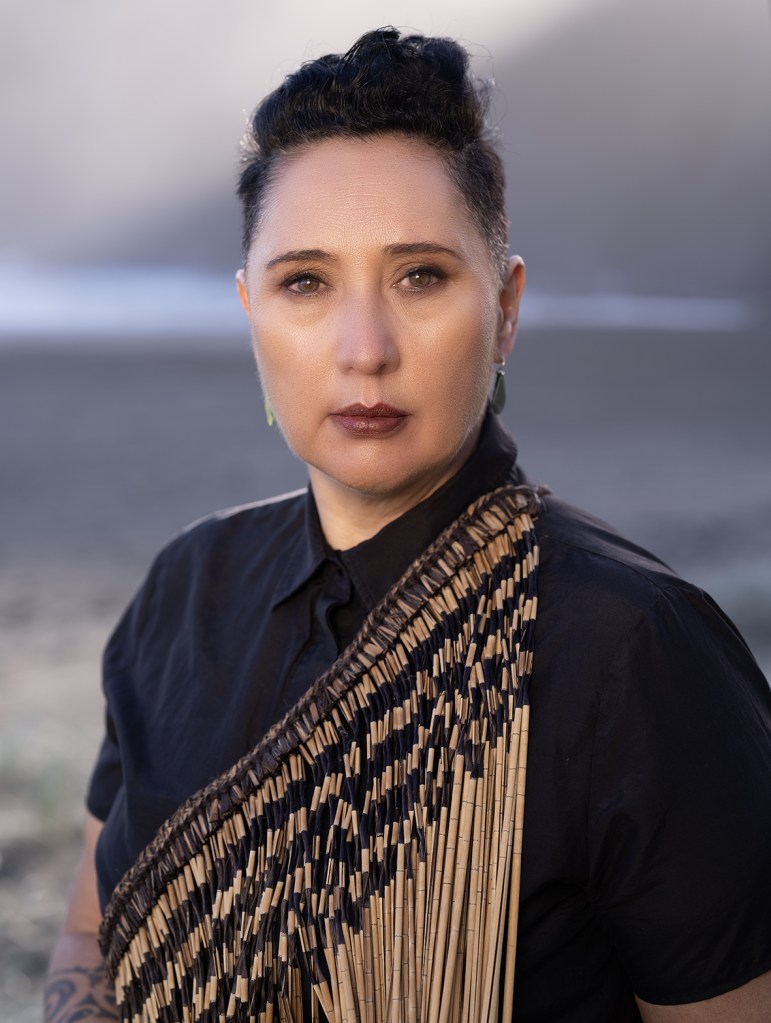
 Maree Sheehan