Maree Sheehan Music composition showreel

Chelsea Winstanley’s documentary follows the journey of curator Nigel Borell as he navigates the constraints between institutional authority and Māori self-determination. Borell’s curatorial vision is clear – Māori art must be authored, not simply advocated for. For the artists, this represents a chance to be seen on their own terms, and is an initiative that ultimately leads some to the global stage of the Venice Biennale. Toi Tū Toi Ora: Contemporary Māori Art was the largest Māori exhibition in the history of Auckland Art Gallery and attracted attendance levels not seen by the gallery since 1989. But its triumph masked a deeper tension.
But as the scale of the exhibition grows, so does the institutional resistance. The result is a reckoning: whose story is being told, and who holds the pen? With many of the artworks exploring the legacy of colonialism, the making of the exhibition itself becomes a living reflection of that very struggle. Laying bare behind-the-scenes conversations rarely seen on screen, TOITŪ Visual Sovereignty lifts the curtain on the inner workings of an institution and examines the cost of visibility without control – and the quiet power of walking away. — Heperi Mita
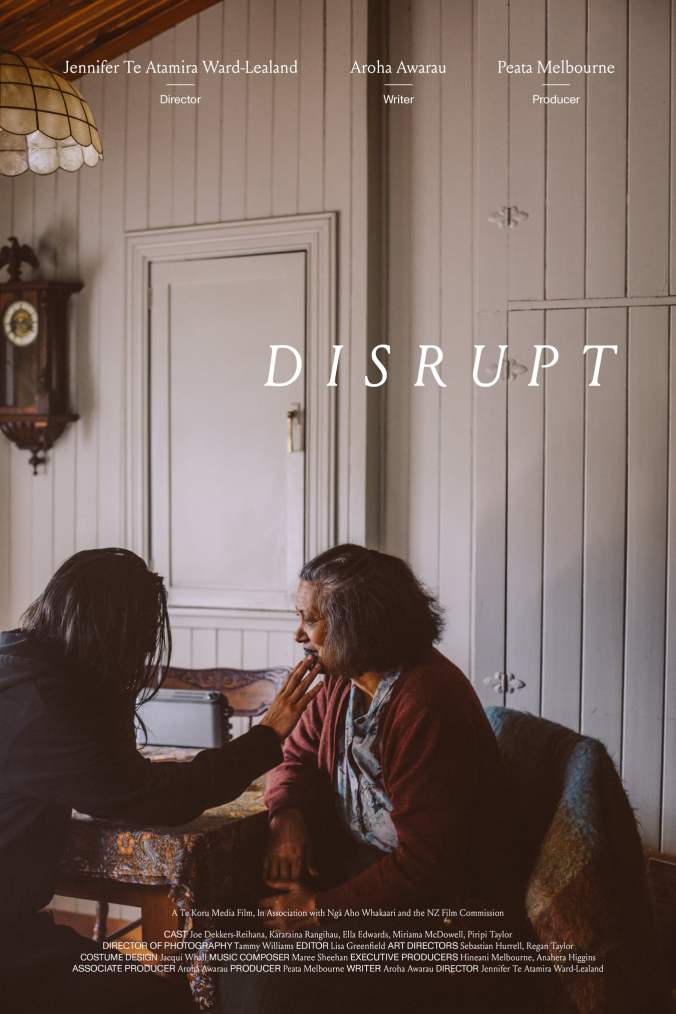
Disrupt, written by former Māori Television journalist Aroha Awarau, and directed by actor Jennifer Te Atamira Ward-Lealand and produced by Peata Melbourne. Ward-Lealand says the short film is about methamphetamine addiction in Aotearoa, how families deal with it, whether Māori or Pākehā, and showcases a young man (Joe Dekkers-Reihana) and the love of his grandmother (Kararaina Rangihau) for her mokopuna.
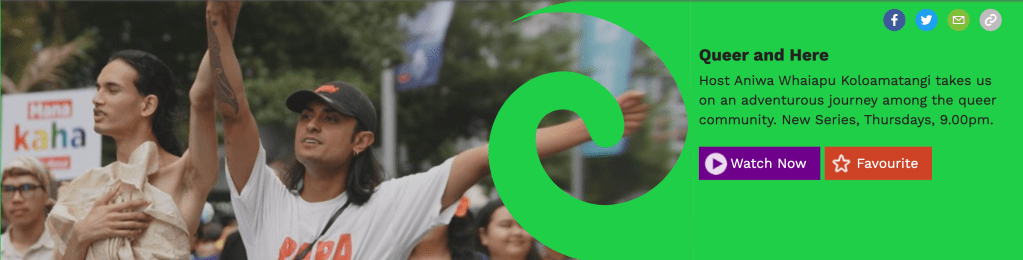
The Queer and Here television series had its debut broadcast on Māori Television on 19th May, 2022. Each of the six episodes follows Aniwa Whaiapu Koloamatangi (Te Rarawa, Te Aupuri, Waikato, Tainui, Tonga) who identifies as takataapui. Within this series he interviews members of the rainbow community and the allies. From meeting one of only two gay rugby teams in New Zealand, to interviewing LGBTQI+ pioneers and activists like Chloe Swarbrick, to receiving his first HIV test, Aniwa appears fearless in his pursuit to educate himself and his viewers. This first of its kind television series in Aotearoa is significant in that is investigates issues that affect the LGBTQI communities. Globally, queer youths are consistently over-represented in suicide and mental health statistics. They are also more likely to experience depression, homelessness, and discrimination and this is substantiated by Aniwa when interviewed for the New Zealand Herald “I wish I’d had access to a good television show detailing the queer experience”. In collaboration with series Director Ramon Te Wake, Jack Media engaged the music compositional skills of Maree Sheehan. It was extremely important to create the appropriate sonic expression that provided the desired texture and mood within each episode.
https://www.maoritelevision.com/shows/queer-and-here/S01E006/queer-and-here-episode-6
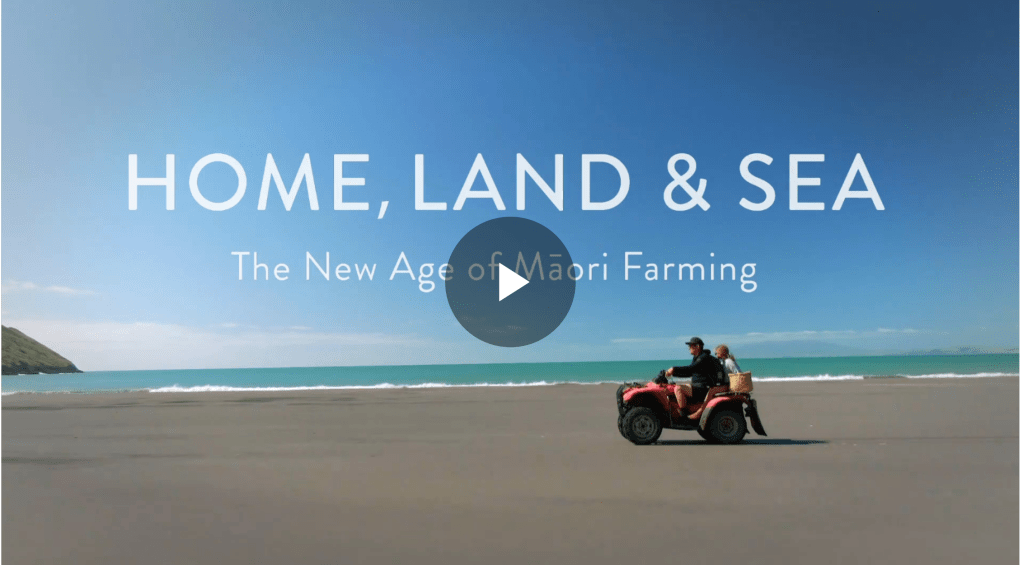
Factual documentary series that highlights and promotes Māori success within the greater farming sector.
https://www.maoritelevision.com/shows/home-land-and-sea/S01E001/home-land-and-sea-episode-1
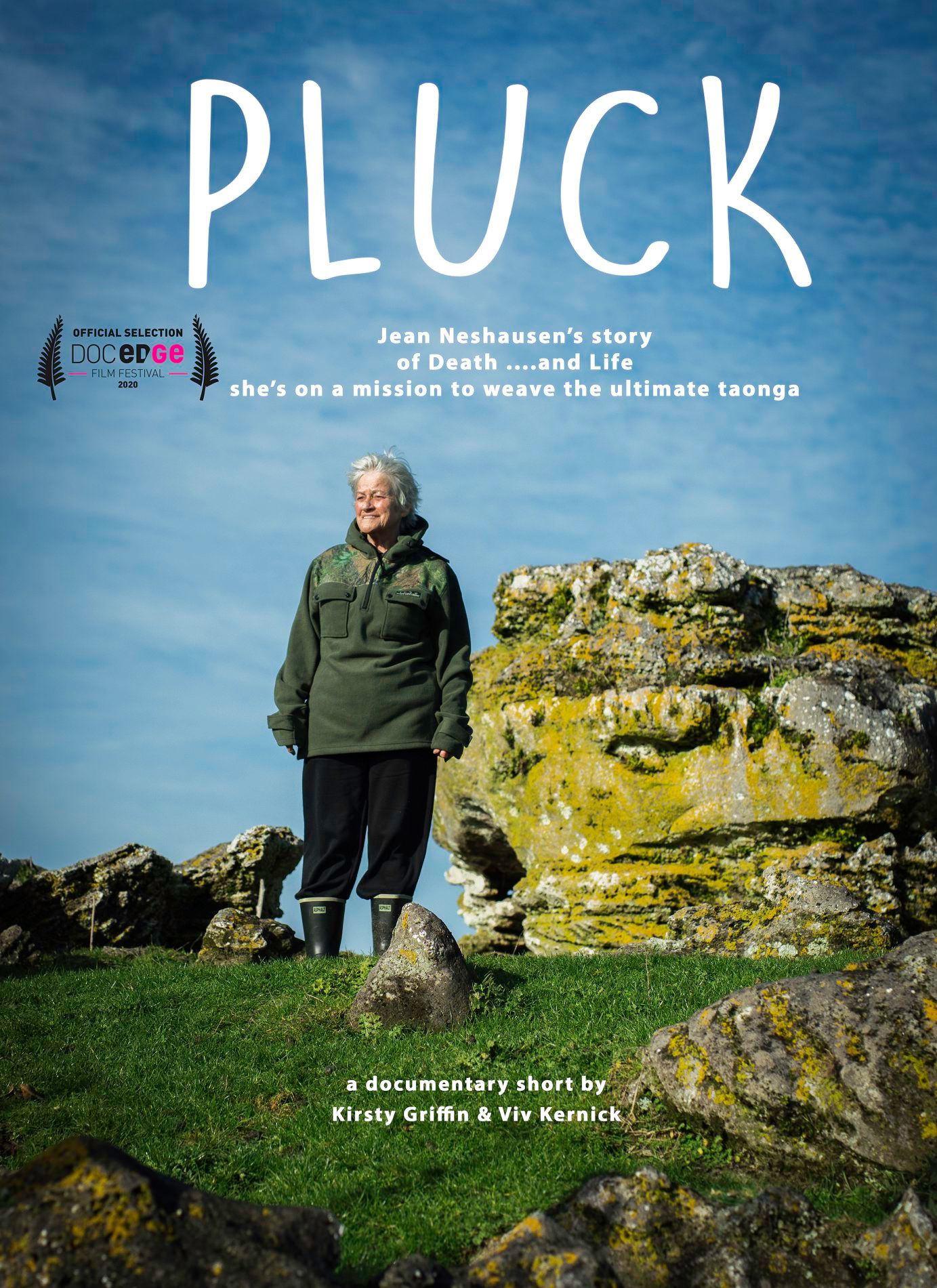
2020 Sound design and music – Maree Sheehan
BEST New Zealand short film DocEdge 2020 by Kirsty Griffin and Viv Kernick
https://festival.docedge.nz/film/pluck/

Featured song ‘You Can’t Hide Love’ – Maree Sheehan
Directed by Gregor Nicholas
Produced by Robin Scholes
https://www.nzonscreen.com/title/broken-english-1996
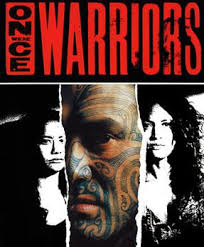
Featured song on soundtrack ‘Kia tu mahea’ – Maree Sheehan
Directed by Lee Tamahori
Produced by Robin Scholes
https://www.nzonscreen.com/title/once-were-warriors-1994
 Music featured in Shortland Street from album ‘Drawn In Deep’ – Maree Sheehan
Produced South Pacific Pictures
Broadcaster Television New Zealand
https://www.nzonscreen.com/title/shortland-street-1992-f5c/series

Title music and sound design – Maree Sheehan
Production – Screentime/Kiwa Media
Broadcaster Māori Television
 Maree Sheehan